Review: Lucky Jet by 1win, mobile data and gameplay overview
Lucky Jet, developed for the 1win casino and popular among players from Multi, is a high-tempo online casino-game that blends simple mechanics with rapid rounds. This review focuses on how different versions of Lucky Jet perform on mobile in terms of data consumption, while also describing gameplay, practical tips for playing on limited data plans, and where to try a demo.
What is Lucky Jet?
Lucky Jet is a crash-style casino-game where a multiplier increases from 1.00x upward and can crash at any time. Players place bets before the round starts and decide when to cash out to lock in the current multiplier. The game is fast, visually driven, and optimized for short sessions, characteristics that make mobile experience and data efficiency crucial, particularly for players in regions like Multi where mobile connectivity varies.
Why mobile data use matters
Mobile data use affects how long you can play, the responsiveness of the UI, and battery life. Players on metered plans or areas with unstable connections care about how many megabytes per hour the app or web version consumes. Developers release updated versions to improve graphics, add features, or optimize network traffic, which changes data usage. Comparing versions helps choose the best option for your needs.
Comparing versions: what changes and why it affects data
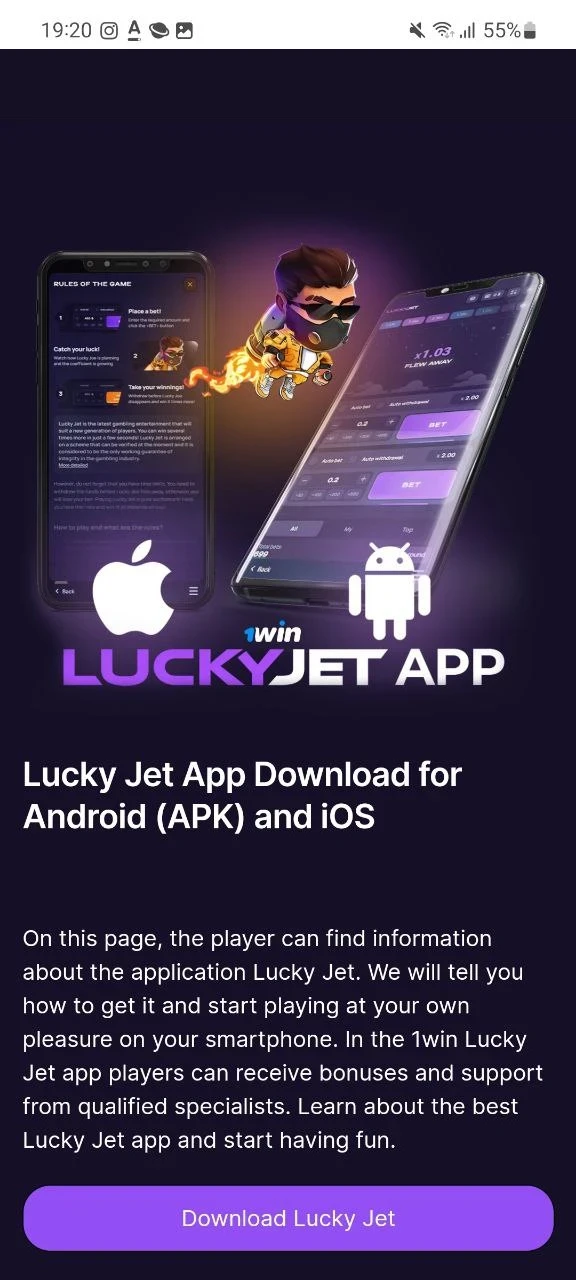
Comparing mobile data use across Lucky Jet versions:
Lucky Jet versions differ mainly by:
- Graphics quality and animation complexity
- Frequency and size of real-time updates (game state, leaderboards, chat)
- Additional integrated features (live stats, soundtracks, mini-widgets)
Version A: Lightweight web client (baseline)
The baseline web client focuses on minimal animations and uses small JSON payloads for round events. It avoids persistent high-bandwidth streams, relying instead on short polling or efficient websocket bursts timed to rounds. Typical observed data use: 5–10 MB per hour when playing actively (placing frequent bets), lower when idling.
Version B: Enhanced UI web client
Version C: Native mobile app with offline assets
A native 1win Lucky Jet app can bundle many visual assets in the install package and use optimized binary protocols for updates. That reduces repeated downloads during play; however, push notifications, analytics, and background syncing can add overhead. Typical data use: 8–18 MB per hour in active play, but much lower long-term if assets are pre-cached and background data is restricted.
Version D: Premium feature build (live stats, video overlays)
Some builds integrate live-rich media (small video snippets, animated leaderboards, or third-party widgets). These can spike data consumption to 30–60 MB per hour or more, especially if high-frame-rate assets or live video are used. Users on constrained plans should avoid these builds.
Practical measurements and playing tips
Measured data usage depends on playstyle. A few practical scenarios:
- Casual play (occasional bets, short sessions): choose the lightweight web client or native app with asset caching — expect under 10 MB/hour.
- Continuous play (many rounds, active chat): the enhanced web client or feature-heavy apps may reach 20–30 MB/hour.
- Social/play-with-streaming (live overlays, video): planning for 30+ MB/hour is prudent.
How to minimize mobile data use
- Use Wi‑Fi whenever possible and prefer Wi‑Fi-only downloads for app updates.
- Install the native app and disable background data and push notifications if you want lower hourly use.
- Switch off live chat or reduce its update frequency when available.
- Disable high-quality animations in settings or choose a “low data” client if offered.
- Close other network-heavy apps to reduce competition for bandwidth and avoid additional data overhead.
Where to play Lucky Jet in Multi
1win hosts Lucky Jet in its online casino lobby accessible via mobile web or app. Players from Multi should check local availability and the recommended client on 1win’s site. The web client works on most mobile browsers; the native app may be offered for Android and iOS (depending on region rules and store availability).
Demo availability
Many versions of Lucky Jet provide a demo mode where you can place simulated bets with virtual credits. Demo mode is ideal for testing data use: it loads the same assets but without financial transactions, letting you measure baseline consumption before committing real money.
Technical considerations for developers and curious players
From a development perspective, optimizing Lucky Jet for mobile data includes:
- Compressing and caching assets, using progressive image formats and sprite sheets.
- Minimizing websocket chatter — batch state updates where possible.
- Using adaptive media quality based on measured bandwidth.
- Providing user-configurable settings for animations and social features.
Latency vs. data tradeoff
Lower data use sometimes increases latency if reducing update frequency. For a game where split-second cashouts matter, balancing timely updates with bandwidth efficiency is critical. The best client gives high-frequency event notifications with minimal payload sizes.
Questions and answers
Frequently asked questions
- Q: Which Lucky Jet version uses the least data?
A: The lightweight web client or a native app with pre-cached assets and disabled background sync typically uses the least, often under 10 MB/hour in active play. - Q: Can I play on mobile without spending much data?
A: Yes — use demo mode, disable live chat/animations, and play via Wi‑Fi where available. - Q: Does higher visual quality improve winning chances?
A: No. Visual fidelity doesn’t affect odds; it only affects data and battery consumption.
Expert feedback
Experienced Player
“I tested different versions while traveling in Multi. The web client saved my plan and was responsive. The app felt smoother but I had to stop background updates to limit data. For long sessions I always connect to Wi‑Fi.”
Advantages and parameters table
| Version | Typical data use (MB/hr) | Pros | Cons |
|---|---|---|---|
| Lightweight web client | 5–10 | Low data, fast load, wide compatibility | Fewer features, simpler UI |
| Enhanced web client | 12–25 | Richer experience, chat and stats | Higher data use, heavier on CPUs |
| Native app (optimized) | 8–18 | Pre-cached assets, smooth UI, better offline performance | Requires install, background services may add data |
| Premium feature build | 30+ | Live media, advanced features | High data consumption |
Final thoughts: choosing the best version for you
For players from Multi who care about data efficiency, the recommended approach is:
- Start with the lightweight web client to test baseline consumption.
- If you plan long sessions, install the native app and pre-cache assets while on Wi‑Fi.
- Avoid premium builds with live video unless you have an ample data plan.
Lucky Jet by 1win delivers an exciting, fast-paced experience. By choosing the appropriate client and tweaking a few settings, you can enjoy many rounds without blowing through your mobile data.